


While your first instinct may be to reach for the phone when your vehicle breaks down, if you prepare yourself beforehand for the call, the process will undoubtedly be significantly less traumatic and frustrating. Knowing what information you’ll be required to provide and what questions you’ll likely be asked will save you time and inconvenience.
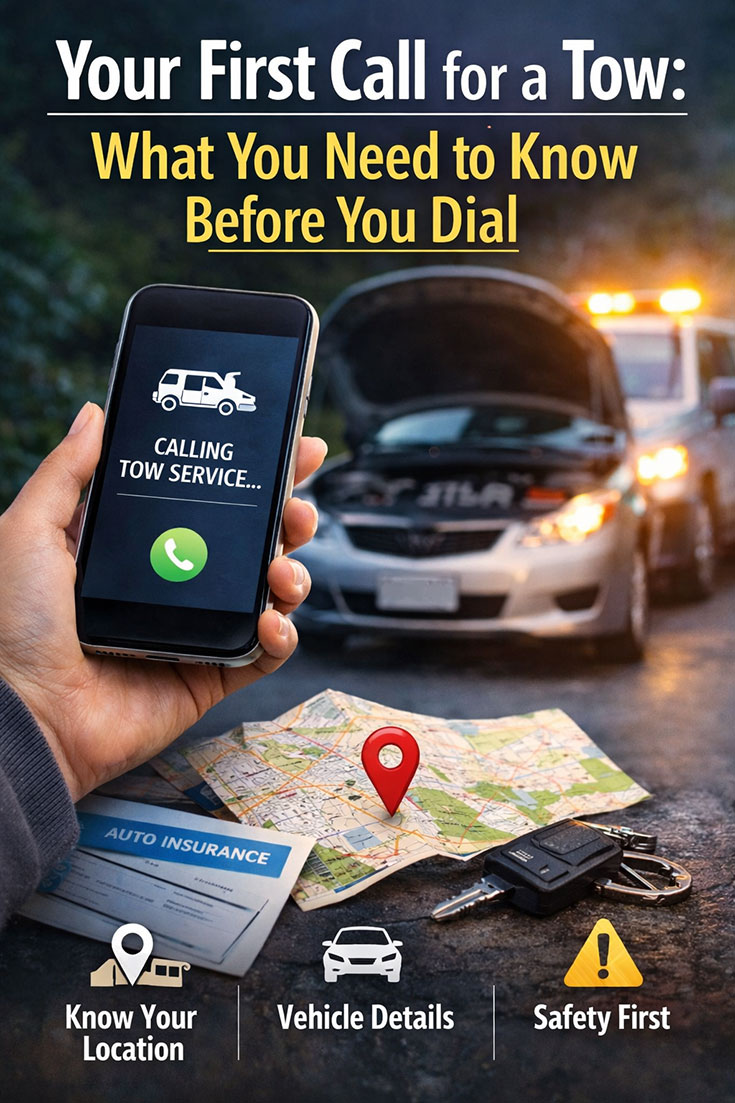
Know How to Detail Your Location First
It may seem self-evident, but this is by far the most critical piece of information you’ll need to supply. Unfortunately, when people are in a panic, and most people are in distressing situations when they need a tow truck, it can be extremely difficult for them to articulate their location.
If you’re on a highway, look for mile markers. Those green signs at the side of the road can help you out. Make sure to note your direction of travel and previous exit. If you’re on a city street, look for intersections or nearby landmarks. Your phone’s GPS can assist, but don’t just spit out coordinates. Dispatchers need workable directions that drivers in their trucks will be able to follow.
Being vague here will set back your estimated time of arrival for a tow truck. “I’m somewhere on Route 9” won’t assist anyone, especially since that route may have taken you miles up the highway.
Know Your Vehicle Information
If you’re going to call a towing company for assistance, they’re going to want information about your vehicle. The company will ask for more than just its color, so ensure you know the make, model, and year of your vehicle. Additionally, if you’re driving something non-standard like a lifted truck, lowboy trailer, or even something that has been modified in some way, let them know right away.
Why? Several scenarios will require different types of towing equipment. A compact car with a dead battery in a parking lot needs totally different tow truck specifications than a full-sized SUV in a ditch. If anyone is interested in what to expect when you call a tow truck company, those unique insights can help people understand how to ensure that they get the correct towing equipment on the first attempt.
The weight of your vehicle is also a valuable piece of information. Tow trucks have weight limits and if your vehicle weighs more than normal or is in a tricky position that will require additional equipment or assistance, they need to know this, so they don’t send the wrong equipment.
Know What’s Wrong with Your Vehicle (To the Best of Your Knowledge)
You don’t need to know what’s wrong with your vehicle. But having at least some details of the nature of the problem will assist dispatchers in knowing how to best help you.
For example, if it’s completely dead or making strange noises. If it’s out of gas versus something that failed the moment you parked it.
The nature of the issue can vary widely and can either require an immediate tow or something that can be resolved without an expensive ride in the back of a truck. For example, dead batteries typically just need a jump start and flat tires just need changing. However, if your car lost its transmission or seized up due to neglect, it’s definitely going to require a tow truck.
If there was something strange about the situation, make sure that you fully disclose all relevant details about the car breaking down as well, including something like if it went through water or hit an obstacle before stopping.
Know Your Insurance Coverage & Payment Method
When calling for a tow truck, make sure that you’ve pulled out your insurance information to see if your roadside assistance has any benefits associated with it. Many insurance policies include coverage for towing, up to a certain distance. However, you’ll want to dial the right number for roadside assistance so that they can verify your vehicle’s current coverage.
If you’re calling a tow truck company directly though, make sure to find out what payment methods they accept beforehand. Most towing agencies will demand payment once services have been rendered and not all of them accept cards for payment. Knowing what kind of payment options they have available before they arrive is critical so there aren’t any hiccups in this regard on what is already likely to be a pretty awful day.
Another way that people can receive towing services is by checking their membership programs with organizations like AAA or others that cover refunds for voided services at restaurants, etc.
Prioritize Safety Above Everything Else
If you find yourself broken down in an unsafe situation or location, the priority is getting yourself to safety first before making any calls for assistance.
If possible get yourself off the road and onto the shoulder as quick as possible and turn on your hazard lights. If it is dark though and you are on a busy road looking at being rescued by a tow truck driver on scene awaiting their ride into town, try and stay in your car with it locked until help arrives.
Let dispatchers know if you are in an unsafe area so they will prioritize the call if possible—and if you are on a remote road at night make sure someone knows where you are and when you are expecting a tow truck to pick you up.
What to Expect After Making Your Call
The company that you call should provide an estimated arrival time after making your call for a tow truck. However, remember that this is only an estimate not set in stone as several circumstances may affect their arrival time like traffic volume and other calls ahead of yours in the queue.
If someone tells you forty-five minutes has passed and it’s been an hour since you made the original call would be reasonable to check in again with an update. However, keep in mind that dispatchers may also be dealing with multiple emergencies themselves.
The driver will also likely give you a call once they’re on their way to ensure that they can easily find you when they arrive at your location. Make sure to have your phone turned up so you can hear it should it happen in case of being stuck waiting for rescue for hours on end with hearing nothing but silence.
The driver may have additional questions when it comes to locating your vehicle so keep the line open.
Conclusion
Your first trip by tow truck doesn’t have to be terrifying if someone prepares themselves accordingly. Utilize all these tips above if someone needs to give all their information over the phone.
Tow truck employees deal with stressed out drivers all day long and are used to people not being their finest self when stuck by the side of the road waiting for help. However, being prepared when calling – for those who may want to know what to expect from this experience – lessens their burdens and ensures people who need assistance receive it as quickly as possible during this dreadful day.

Speak Your Mind