


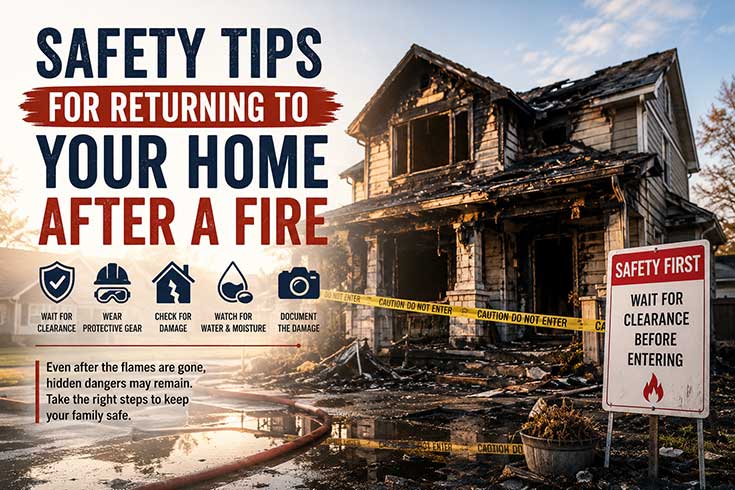
Returning home after a fire can be stressful. Even when the flames are gone, your home may still have hidden dangers from smoke, soot, water, damaged wiring, or weak materials. Before you enter, make sure the property has been cleared for entry.
Wait Until It Is Safe to Return
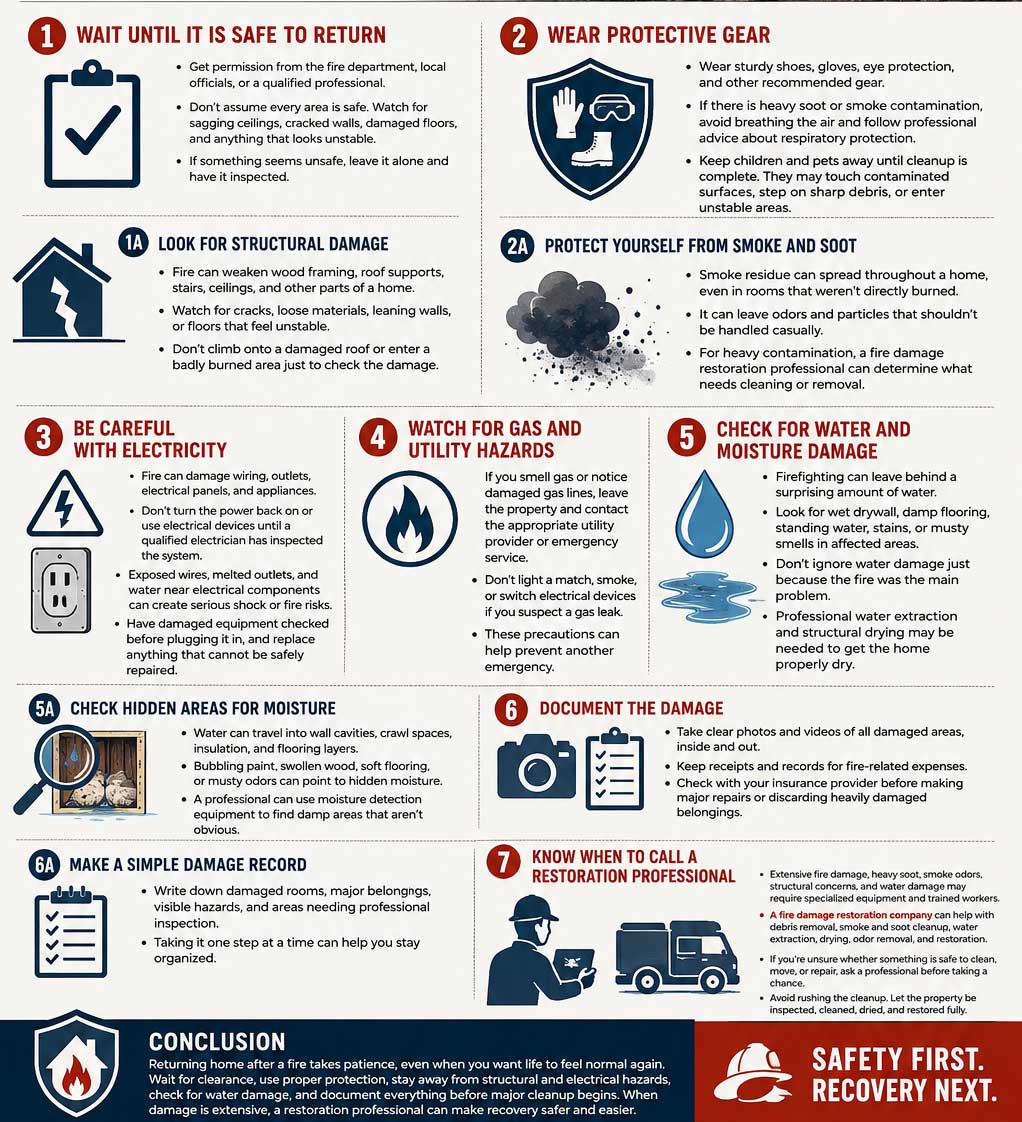
The first step is to wait for permission from the fire department, local officials, or a qualified professional. A house can look fine outside while its structure or electrical system has serious damage. Entering too soon can expose you to debris, exposed wires, smoke residue, and other hazards.
Once you receive clearance, don’t assume every area is safe. Stay away from sagging ceilings, cracked walls, damaged floors, and anything that looks unstable. If something seems unsafe, leave it alone and have it inspected.
Look for Structural Damage
Fire can weaken wood framing, roof supports, stairs, ceilings, and other parts of a home. Watch for cracks, loose materials, leaning walls, or floors that feel unstable. Don’t climb onto a damaged roof or enter a badly burned area just to check the damage.
Wear Protective Gear
Smoke and soot can remain on walls, furniture, floors, and belongings long after a fire is out. Wear sturdy shoes, gloves, eye protection, and other recommended gear. If there is heavy soot or smoke contamination, avoid breathing the air and follow professional advice about respiratory protection.
Keep children and pets away until cleanup is complete. They may touch contaminated surfaces, step on sharp debris, or enter unstable areas without understanding the danger. They’re curious, but keeping them somewhere else is safer.
Protect Yourself From Smoke and Soot
Smoke residue can spread throughout a home, even in rooms that weren’t directly burned. It can leave odors and particles that shouldn’t be handled casually. For heavy contamination, a fire damage restoration professional can determine what needs cleaning or removal.
Be Careful With Electricity
Fire can damage wiring, outlets, electrical panels, and appliances. Don’t turn the power back on or use electrical devices until a qualified electrician has inspected the system. Exposed wires, melted outlets, and water near electrical components can create serious shock or fire risks.
The same applies to appliances exposed to fire, smoke, or water. An appliance may look fine but still have hidden damage. Have damaged equipment checked before plugging it in, and replace anything that cannot be safely repaired.
Watch for Gas and Utility Hazards
If you smell gas or notice damaged gas lines, leave the property and contact the appropriate utility provider or emergency service. Don’t light a match, smoke, or switch electrical devices if you suspect a gas leak. These precautions can help prevent another emergency.
Check for Water and Moisture Damage
Firefighting can leave behind a surprising amount of water. Look for wet drywall, damp flooring, standing water, stains, or musty smells in affected areas. Hidden moisture can also create conditions for mold growth.
Don’t ignore water damage just because the fire was the main problem. Wet materials can warp or weaken, while lingering moisture can lead to mold. Professional water extraction and structural drying may be needed to get the home properly dry.
Check Hidden Areas for Moisture
Water can travel into wall cavities, crawl spaces, insulation, and flooring layers. Bubbling paint, swollen wood, soft flooring, or musty odors can point to hidden moisture. A professional can use moisture detection equipment to find damp areas that aren’t obvious.
Document the Damage
Before cleaning or throwing anything away, take clear photos and videos of the damaged areas. Photograph walls, ceilings, floors, furniture, appliances, belongings, and the outside of the property. This record can help with insurance and restoration planning.
Keep receipts and records for fire-related expenses. These may include lodging, clothing, food, supplies, or other costs, depending on coverage. Check with your insurance provider before making major repairs or discarding heavily damaged belongings.
Make a Simple Damage Record
A simple list can make recovery less overwhelming. Write down damaged rooms, major belongings, visible hazards, and areas needing professional inspection. Taking it one step at a time can help you stay organized.
Know When to Call a Restoration Professional
Some cleanup jobs are too large or risky to handle alone. Extensive fire damage, heavy soot, smoke odors, structural concerns, and water damage may require specialized equipment and trained workers. A fire damage restoration company can help with debris removal, smoke and soot cleanup, water extraction, drying, odor removal, and restoration.
Professional help can reduce the chance of missing hidden damage. A wall may look dry while moisture remains behind it, or a room may look clean while smoke residue remains on surfaces. If you’re unsure whether something is safe to clean, move, or repair, ask a professional before taking a chance.
Avoid Rushing the Cleanup
It’s normal to want everything back to normal quickly. Still, rushing can lead to injuries, damaged belongings, or problems that become more expensive later. Give the property time to be inspected, cleaned, dried, and restored before treating it like a normal home again.
Conclusion
Returning home after a fire takes patience, even when you want life to feel normal again. Wait for clearance, use proper protection, stay away from structural and electrical hazards, check for water damage, and document everything before major cleanup begins. When damage is extensive, a restoration professional can make recovery safer and easier.

Speak Your Mind