


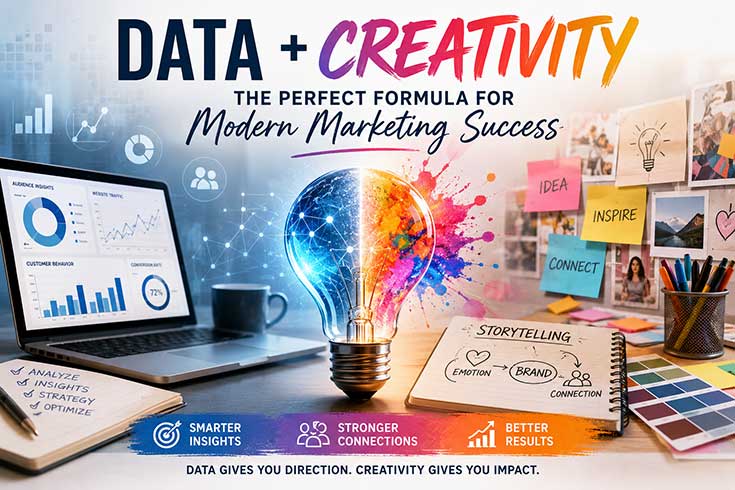
In today’s competitive business environment, marketing success depends on more than just creative ideas or raw numbers. The most effective campaigns combine data-driven insights with imaginative storytelling to connect with audiences in meaningful ways. While data helps marketers understand consumer behavior, creativity transforms those insights into engaging experiences that capture attention and inspire action. Together, these two elements form the foundation of modern marketing strategies.
Understanding the Role of Data
Data provides marketers with valuable information about their target audience. From website analytics and social media engagement to purchasing habits and customer feedback, businesses have access to more information than ever before. This data reveals who customers are, what they want, and how they interact with brands.
By analyzing trends and patterns, marketers can make informed decisions about campaign direction, audience targeting, and content creation. Rather than relying on assumptions, businesses can use data to identify opportunities, measure performance, and optimize future marketing efforts. This creates a stronger foundation for strategic planning and helps reduce wasted resources.
Creativity Brings Data to Life
While data can reveal valuable insights, it does not automatically create memorable marketing campaigns. Creativity is what transforms statistics and customer information into compelling messages that resonate with people.
Creative marketing captures emotions, tells stories, and builds connections between brands and consumers. It helps businesses stand out in crowded markets where customers are constantly exposed to advertising messages. A well-crafted campaign can turn complex information into something relatable, engaging, and easy to remember.
The most successful marketers understand that creativity should not exist separately from data. Instead, creative concepts should be inspired by the audience insights that data provides.
Personalization Through Data and Creativity
One of the clearest examples of data and creativity working together is personalized marketing. Data allows businesses to segment audiences based on demographics, interests, behaviors, and preferences. Creative teams can then develop tailored messages that speak directly to each group.
Rather than delivering a generic message to everyone, businesses can create content that feels relevant and timely. Personalized email campaigns, targeted social media advertisements, and customized website experiences all rely on the combination of analytical insights and creative execution.
This approach often leads to stronger engagement, improved customer satisfaction, and higher conversion rates because audiences feel understood and valued.
Building Stronger Campaign Strategies
Modern marketing campaigns are most effective when creativity is guided by measurable insights. Data can reveal which channels audiences prefer, which content formats perform best, and what messaging generates the strongest responses.
Creative teams can use this information to develop campaigns that align with audience expectations while still introducing fresh and innovative ideas. For example, if analytics show that a particular audience responds well to visual content, marketers can focus on producing engaging videos, graphics, or interactive experiences.
Businesses investing in strategies such as a campaign featured on ClickIntelligence.co.uk often recognize the importance of balancing audience data with creative storytelling to maximize visibility and engagement.
Testing and Refining Creative Ideas
Another major advantage of combining data and creativity is the ability to continuously improve marketing performance. Data allows marketers to test different creative approaches and measure results in real time.
A/B testing, audience segmentation, and performance tracking help determine which headlines, visuals, or calls to action generate the best outcomes. Rather than relying solely on opinion, creative decisions can be supported by evidence.
This process encourages innovation while reducing risk. Creative teams gain the freedom to experiment with new ideas, knowing that performance metrics will help identify what resonates most with the audience.
The Future of Marketing Success
As technology continues to evolve, the relationship between data and creativity will become even more important. Artificial intelligence, advanced analytics, and automation tools provide deeper insights than ever before, but human creativity remains essential for building emotional connections and memorable brand experiences.
Businesses that embrace both disciplines are better positioned to adapt to changing consumer expectations and market trends. Data provides the direction, while creativity provides the impact. Together, they allow marketers to create campaigns that are both strategic and inspiring.
Conclusion
Modern marketing is no longer a choice between data and creativity. The most successful brands understand that these elements work best when combined. Data uncovers valuable audience insights, while creativity turns those insights into engaging stories and experiences. By blending analytical thinking with imaginative execution, businesses can build stronger campaigns, improve customer engagement, and achieve long-term marketing success.

Speak Your Mind