web analytics

How Moms Can Make Money on TikTok With Gaming (Yes, Even Without Being a “Pro”)

If you think gaming on TikTok is only for teenage boys or elite streamers, think again. In 2026, gaming content is one of the fastest-growing niches on TikTok, and more moms than ever are turning casual gameplay into real income — without expensive equipment, long livestreams, or showing their face.
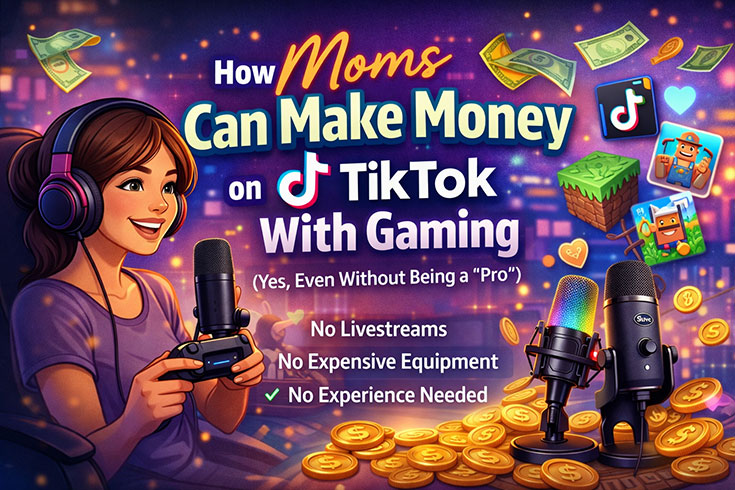
Illustration of a mom gaming and creating content to make money on TikTok without being a professional gamer

Whether you’re playing with your kids, unwinding after bedtime, or already obsessed with a game, TikTok gaming can become a flexible side income that fits mom life.
Let’s break down how it actually works.


Why Gaming Content Works So Well on TikTok

TikTok favors watchable, repeatable content, and gaming delivers that naturally.
Gaming videos often:

  • Keep viewers watching longer
  • Encourage comments (“What level is this?” “How did you do that?”)
  • Work well with trending sounds
  • Appeal to kids, teens, AND parents

Even simple clips — like satisfying gameplay loops or funny fails — can rack up thousands of views.
You don’t need to be loud, competitive, or a professional gamer.
You just need consistency and a clear angle.


Gaming Niches Moms Are Using Successfully

Here are gaming styles that work especially well for moms:

🎮 Cozy & Casual Games

Perfect for relaxing, low-stress content.

  • Roblox (yes, even moms!)
  • Minecraft
  • Simulation and building games
  • Farming or decorating games

These are great if you:

  • Play with your kids
  • Enjoy slow, calming gameplay
  • Want background-style videos

🧩 Puzzle & Strategy Games

These perform well with voice-over or text tips:

  • Mobile puzzle games
  • Brain games
  • Level-completion clips
  • “How I beat this level” videos

😂 Funny / Relatable Gaming Moments

You don’t need skill — just honesty.

  • Fails
  • Learning curves
  • “Mom tries gaming for the first time”
  • Playing after kids go to bed

Relatability > skill.


7 Real Ways Moms Make Money With TikTok Gaming

Below are 8 different ways that moms can make money playing games on TikTok…

#1 – TikTok Creator Rewards (Views = Money)

If your account qualifies, TikTok pays for video views — and gaming videos often perform well because people watch longer.

Short clips + consistent posting = passive income potential.


#2 – Affiliate Links (Games, Gear & Accessories)

You can earn commissions by linking:

  • Gaming accessories
  • Headsets
  • Controllers
  • Game gift cards
  • In-game items (when allowed)

This works even with a small following.


#3 – Brand Deals & UGC (Without Being an Influencer)

Brands pay moms to create gaming-related content:

  • App demos
  • Gameplay clips
  • Tutorials
  • Family-friendly gaming ads

You don’t need a huge audience — brands care about usable content.


#4 – TikTok Shop Gaming Products

Many gaming accessories are already available on TikTok Shop:

  • LED lights
  • Controllers
  • Desk accessories
  • Headphones
  • Gaming chairs

You can create short demo videos and earn commissions directly.


#5 – Selling Digital Products

Gaming moms sell:

  • Game guides
  • Roblox resources
  • Cheat sheets
  • Printable planners
  • Game-themed coloring pages

This works especially well if you already sell printables or KDP books.


#6 – Driving Traffic to a Blog or YouTube Channel

Gaming TikTok clips are perfect “top of funnel” content:

  • Link to longer tutorials
  • Monetize with ads + affiliates
  • Repurpose content across platforms

#7 – Live Gifts (Optional)

Some moms do short, quiet gaming lives:

  • Cozy gameplay
  • No talking required
  • Viewers send gifts

This is optional — not required to make money.


You Don’t Need to Show Your Face (or Your House)

Many moms succeed with:

  • Screen recordings only
  • Gameplay + captions
  • Text-on-screen tips
  • Voice-overs recorded later

If privacy matters to you, gaming content is one of the best niches for staying anonymous.


What You Actually Need to Start

You don’t need much:

  • A phone or tablet
  • Screen recording enabled
  • A game you already play
  • TikTok account
  • 30–60 seconds per video

That’s it.

No ring lights. No fancy setup. No livestream marathons.


The Biggest Mistake Moms Make

Waiting until everything is “perfect.”

You don’t need:

  • A big following
  • A niche picked forever
  • A monetization plan on day one

You just need to start posting.

Momentum comes from action.


Final Thoughts

Gaming on TikTok isn’t about being the best player.

It’s about being consistent, relatable, and real.

If you already game — even casually — you’re sitting on content that could turn into income.

And if you don’t? Plenty of moms start by playing with their kids and grow from there.

How Premarital Agreements Protect Assets

A recent study indicates that there is a remarkable surge in prenup adoption among the younger population. The study indicates that more than 40 percent of the engaged or previously married Gen Z and Millennial couples are choosing to enter prenuptial agreements.

How Premarital Agreements Protect Assets

A prenuptial agreement could serve as a key safety assurance for one’s financial life. The agreement should stipulate asset ownership, obligations, and protection from possible increases. 

Let’s discuss how a premarital agreement can effectively protect assets.  [Read more…]

Your First Call for a Tow: What You Need to Know Before You Dial

While your first instinct may be to reach for the phone when your vehicle breaks down, if you prepare yourself beforehand for the call, the process will undoubtedly be significantly less traumatic and frustrating. Knowing what information you’ll be required to provide and what questions you’ll likely be asked will save you time and inconvenience.

What to know before calling a tow truck for the first time, including location details, vehicle information, and safety tips.

Know How to Detail Your Location First

It may seem self-evident, but this is by far the most critical piece of information you’ll need to supply. Unfortunately, when people are in a panic, and most people are in distressing situations when they need a tow truck, it can be extremely difficult for them to articulate their location. [Read more…]

The Difference Between Intimacy Coaching and Traditional Therapy

Most couples who experience a lack of connection turn to therapy as a potential solution. Therapy isn’t the only solution available, though, and one that works quite differently than for quite different reasons. By reviewing the differences between intimacy coaching and therapy, you can determine which path might be best for you and your relationship.

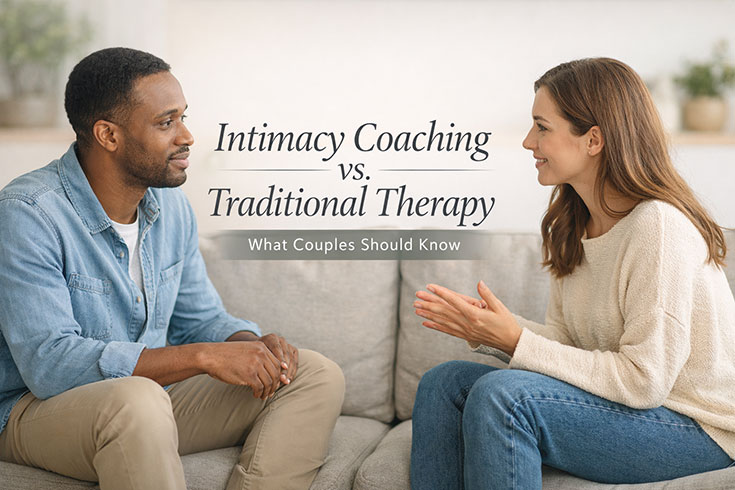
Couple discussing intimacy coaching versus traditional therapy

How Each Defines the Problem
Therapy generally begins with a medical model. Therapists look for diagnoses and pathologies to “treat” people, approaching problems as conditions that need fixing. There is a focus on what’s wrong and how to fix the cause of the distress. Often, therapists engage in dialogue about trauma or childhood or discussing psychological features that might underlie the current challenges.

Coaching starts from an entirely different premise. Coaching assumes you are healthy but stuck or lacking certain skills. Instead of a diagnosis, coaching involves identifying a goal and building capacity. Coaching focuses on where you want to go, not necessarily what went wrong. For couples who struggle with physical or emotional connection, intimacy coaching provides you with the tools and framework to develop the capacity to create the desired level of connection, communication, desire, and dynamic in the relationship you envision.
This difference might not seem significant; it is. Approaching connection challenges as “pathologies” that need to be treated is entirely different than approaching your issue as one of lacking skill.

The Scope of Credentials
Therapists do the heavy lifting when it comes to training, usually getting a master’s or a doctorate-level education in psychology, social work, or counseling. They are also licensed by the State in which they practice, which involves thousands of hours of supervised clinical experience.

Licensed therapists are also required to get continuing education credits to renew their licenses. This long training process prepares therapists to treat conditions like mental health issues, traumas, and psychological conditions.

Coaches come from diverse educational backgrounds. Some have coaching certifications through coaching organizations, while others’ coaching certifications might come from schooling in related fields like counseling, teaching, or relationship research. Coaching training focuses on skills like facilitation, communication skills, goal setting, and behavior change, not treatment and diagnosis. Most intimacy coaches have training in other areas, like somatic work, sexuality, or relationship dynamics.
Neither set of credentials is better than the other. Therapists are trained in the treatment of psychological disorders, while coaches are trained in behavior change.

What Happens in Sessions
Therapy sessions involve a lot of processing emotions, feelings, and tendencies. A couple’s therapist may spend weeks working with you on how your family of origin created your challenges or in processing your feelings about the resentment that built up over years of misunderstanding each other or unmet needs. The pace might feel slow because trauma processing takes time.

Coaching sessions are more action-oriented. You can come with an issue to work through, learn a new communication exercise, and practice it in the session. Coaches assign homework and check in on your progress between sessions. In coaching, you are likely to have more homework to “score” toward mastering a new skill than processing trauma.

It’s in this area that coaching and therapy become relevant to couples who need help rebuilding their relationships. Couples may benefit from therapy to process and heal attachment injuries before moving into coaching to practice the skills needed to restore their connection.

The Role of Insurance
Most therapy forms are likely to be covered by health insurance, making these services financially accessible to most of those who need them. This relationship usually requires therapists to give clients a mental health diagnosis if they want to bill insurance for their work. This requirement means that there are usually records kept on therapists’ files about their patients. While this exchange might feel comfortable to some individuals, it is not ideal for all.

Coaching is very unlikely to be covered by insurance as it is not seen as a form of medical intervention. Clients pay out of their own pocket for coaching services. The fees for coaching services vary from $100 to $300+ per session based on the experience level of the coach and the geographical location. Insurance seems like a good deal for therapy services; however, there might be upsides to paying out of pocket regarding coaching without the need for a diagnosis and without any medical records documenting your sessions.

This procedural element means that coaching is accessible for those who might not want an official record of their issues kept but also means that coaching operates outside of medical models and systems.

Time Frames
When thinking about therapist practices, therapy typically occurs over a long period, months, or even years. Therapists work with clients to overcome psychological challenges that often developed over many years. Many therapists don’t place specific endpoints on their work with clients; they allow the work to happen until the client has achieved what they need within the therapeutic environment. While this approach makes sense within the psychological context, it can be frustrating if you’re looking for rapid improvement to your relationship.

Coaching generally occurs within shorter time frames with specific endpoints for completion. For example, coaches might structure their coaching around packages for a set amount of time instead of an indefinite number of sessions week after week. You might work together for three months or six months, establishing specific goals within that period and working toward them as a couple.

Both time frames have pros and cons. Healing wounds from psychological distress takes time. Traditional therapy models can be useful when established properly by qualified practitioners. Skill-building can happen much more quickly when focused correctly, though.

When Each Should be Used
If you and your partner struggle with mental health conditions or issues related to psychological constructs, therapy might be the best intervention to begin your journey together. Conditions like PTSD or depression should be treated clinically, and therapy is best suited to do this while also taking the time to understand how these conditions impact interpersonal relationships.

If you are generally healthy but may need coaching in certain areas or if you feel “stuck” in certain habits that you want to avoid, then coaching makes sense as the first step for couples to take towards improvement.

Some situations undoubtedly require therapy. Couples struggling with conditions like addiction or serious mental health issues like personality disorders or antisocial behavior might benefit from coaching but should look at coaching as an intervention only in conjunction with other needed therapies.

The Middle Ground
There are many practitioners who blend these two interventions into one service. Some licensed therapists acknowledge that parts of their backgrounds come from coaching organizations. They offer both services to their clients in conjunction with each other, while others may have blended their skills over the years but mainly identify themselves as coaches now. The lines don’t have to be rigidly placed where professional organizations say they should be.

If you are unsure whether intimacy coaching will be beneficial, it might be helpful for you as a couple to return to thinking of difficulties your relationship faces versus relationship-based challenges from one of the partners or one partner towards another partner?

Pay attention to how you especially struggle within certain areas; the class names/classes like Coaching 101 might indicate classes that outline certain gaps you might want filled, or what might be evaluated within coaching sessions could potentially be evaluated within contexts or friend groups in other classes you’ve attended where you felt empowered around your partner.

Decision-Making Suggestions
Consider all these when choosing whether intimacy coaching is best for you. Start a re-evaluation of your relationship before leaving the therapeutic model behind completely.
If you enjoy the process and feel well suited for this intervention model it might be useful to fill gaps in your relationship with your partner not just regarding intimacy towards another but other areas.

If you want to assess honesty levels, please make sure there is an equal effort put forth throughout your relationship balance by putting emphasis and efforts towards ensuring equal effort is displayed immediately when going back into another therapeutic model after engaging in intimacy coaching?

An initial single session with a therapist or coach practitioner can typically determine at least the first few steps when starting to attempt to save/improve your relationship towards potential improvements; however, both potentially require months of sessions evaluating potential areas where deficiencies might exist within the individuals themselves rather than putting blame upon their partners not placing effort towards the relationship as equally as they might place towards their partners?

Neither should feel negligent entering either intervention as situations can occur where the evaluator may be placed where they first walk into the room, either watching as they commit to addressing challenges? deficiencies? trying to overcome an innate nature/impulse?

For couples reflecting on relationship satisfaction and long-term fulfillment, exploring broader conversations about partnership and happiness can also be helpful. You may find this article insightful: Are Unmarried Women Happier?

Both improve romantic relationships positively.